House Bill Reports
Colorado Department of Corrections House Bill Reporting
House Bill reports are reports the Colorado Department of Corrections has been mandated to report on based upon legislation introduced in the Colorado State House of Representatives, passed by the legislature, and signed into law by the governor.
For each bill on this page, you will find a bill summary, information on why the legislation is important to you, at a glance statistical information, and copies of the reports we provide to the state legislature.
HB 24-1445 Measures Related to Parole Supervision Conditions
Information regarding HB 24-1445, including the full text of the bill and information on its sponsors may be found on the HB 24-1445 page of the Colorado General Assembly website.
Bill Summary: This law makes the financial side of parole more transparent and fair. It requires the state to report all supervision fees during annual "SMART Act" hearings so the public can see the financial impact on individuals. Importantly, it removes non-payment of these fees as a legal basis for revoking a person's parole or probation. It also requires parole officers to schedule meetings in "good faith" to avoid conflicts with a person’s work or family obligations.
Why this matters to the community:
- Constitutional Compliance: It ensures that a person’s freedom is not based on their bank account. This aligns with federal court rulings that state people cannot be jailed simply for being too poor to pay government fees (known as "debtors' prisons").
- Workforce Support: By requiring officers to schedule meetings around a person’s job, the law helps people stay employed. This keeps the local economy moving and reduces the risk that someone will return to crime after losing their job.
- Fiscal Responsibility: Sending someone back to prison for a "money issue" is expensive for taxpayers. This law keeps people in the workforce, where they can pay taxes and support their families, rather than becoming a financial burden on the state.
At a glance summary of 2025 data:
- During Fiscal Year (FY) 2025, the Colorado Department of Corrections (CDOC) did not assess parole supervision fees.
- There were zero (0) parolees who were charged a parole supervision fee; during FY 2025, zero ($0.00) fees were charged per month, and the total parole supervision fees collected by the CDOC for the year were also zero ($0.00).
- However, during FY25 the Protocol vendor did collect an administrative fee; this was discontinued as of October 3, 2025.
Copies of the reports the department provides for this legislation may be accessed by clicking below.
- HB 24-1445 Measures Related to Parole Supervision Conditions Reports
HB 23-1013 Use of Restrictive Practices in Prison:
Information regarding HB 23-1013, including the full text of the bill and information on its sponsors may be found on the HB 23-1013 page of the Colorado General Assembly website.
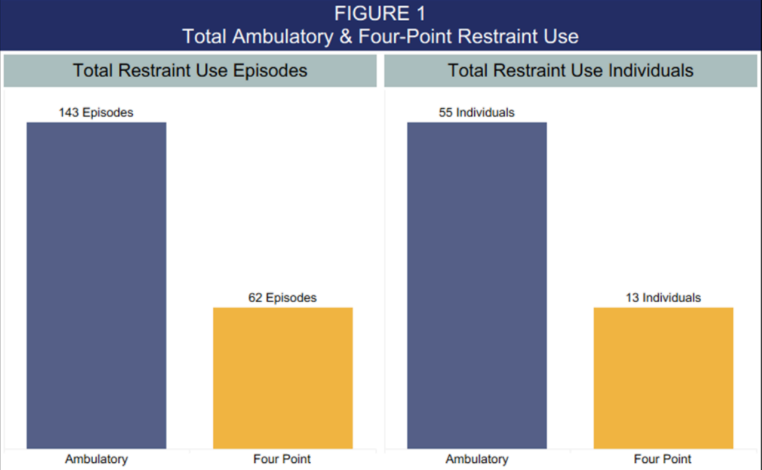
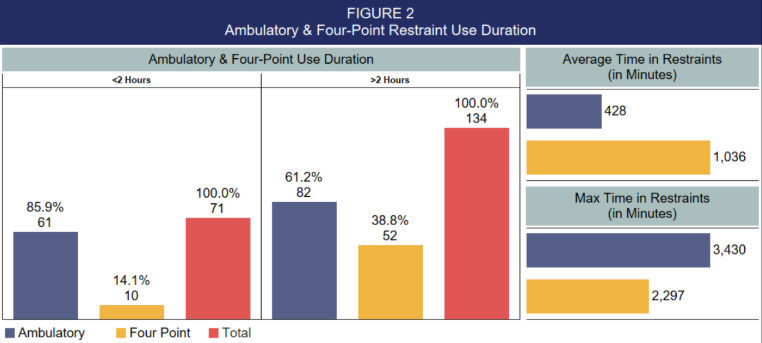
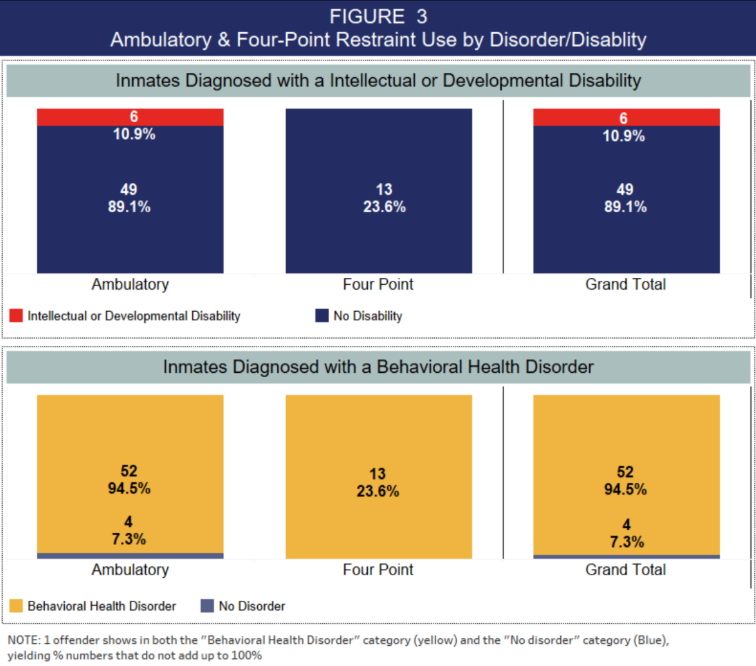
Bill Summary: This act requires the Department of Corrections (DOC) to adopt national safety standards for using physical restraints and isolation by July 1, 2027. The law mandates that prisons document every use of force and screen all new inmates for past trauma or self-harm risks. It also establishes a strict "check and balance" system for medication administered without consent (involuntary medication). This can occur only if a medical committee and a facility superintendent agree that the person poses a danger to themselves or others and that all other options have failed.
Why this matters to the community:
- Reducing State Liability: By adhering to "nationally recognized minimum standards," the state reduces the risk of costly lawsuits. When prisons don't follow these standards, taxpayers often end up paying for legal settlements caused by injuries or civil rights violations.
- Better Health Outcomes: Medical decisions are now driven by doctors rather than security staff. This ensures that "chemical restraints" (using medication solely to keep people quiet) aren't used for the facility's convenience. This keeps inmates healthier and more stable.
- Public Safety and Re-entry: Research shows that when inmates are treated humanely and maintain their visitation rights (which were added to this law's focus in 2025), they are much more likely to succeed upon re-entry. Safer prisons lead to safer neighborhoods.
- Accountability: The mandatory annual reports to the state legislature ensure that the public can see how often force and medication are being used. This transparency holds the DOC accountable for using these extreme measures only when necessary.
At a glance summary of 2025 data:
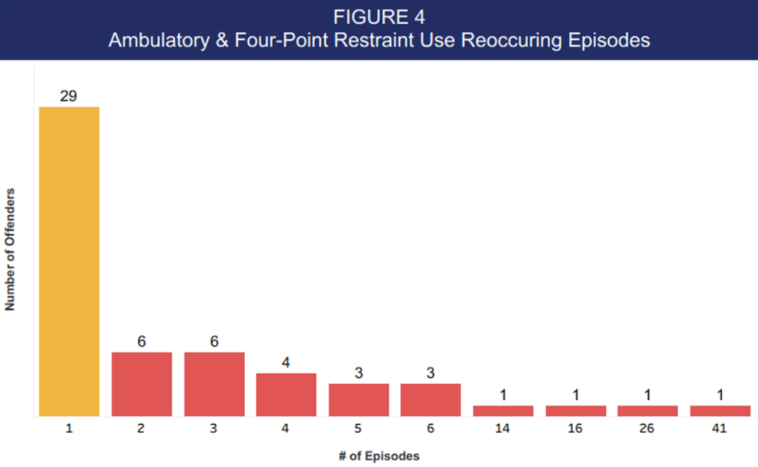
Copies of the reports the department provides for this legislation may be accessed by clicking below.
- HB 23-1013 Use of Restrictive Practices in Prisons Reports
Use of Restrictive Practices in Prisons FY25
HB 18-1040 Incentives for Mental Health Providers
Information regarding HB 18-1040, including the full text of the bill and information on its sponsors may be found on the HB 18-1040 page of the Colorado General Assembly website.
Bill Summary: This law targets the shortage of therapists in prisons, especially those needed for mandated sex offender treatment. It requires the DOC to track the number of inmates awaiting required treatment. It establishes an "incentive plan" (such as bonuses and travel pay) to attract mental health professionals to rural areas or "hard-to-staff" facilities.
Why this matters to the community:
- Victim Prevention: Mandated treatment is a key tool for stopping people from re-offending. When treatment is delayed due to insufficient staffing, the community is at greater risk.
- Clearing Parole Backlogs: Many inmates remain in prison past their parole dates because they haven't completed a required class. This wastes millions of taxpayer dollars on unnecessary jail time.
- Equity for Rural Areas: This bill ensures that rural Colorado facilities can attract the same high-quality specialists as big cities, keeping state safety mandates consistent across the whole state.
At a glance summary of 2025 data:
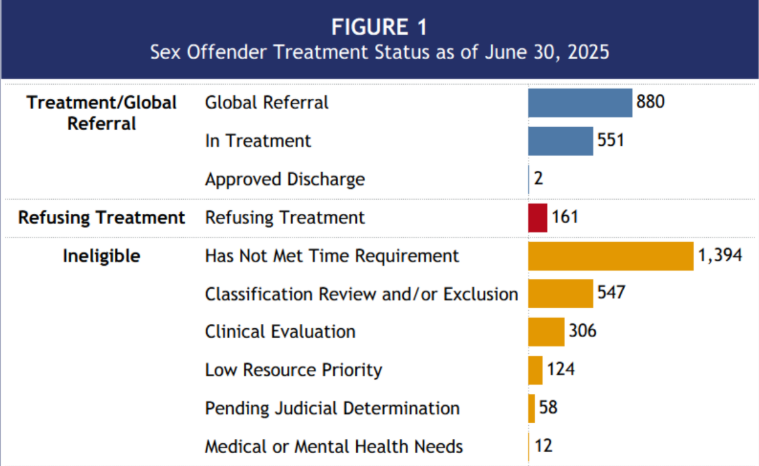
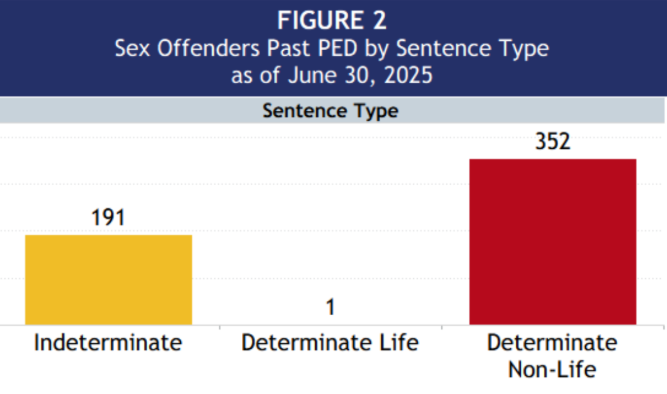
Copies of the reports the department provides for this legislation may be accessed by clicking below.
- HB 18-1040 Incentives for Mental Health Providers Reports
Incentives for Mental Health Providers FY25 Incentives for Mental Health Providers FY24
Incentives for Mental Health Providers FY23 Incentives for Mental Health Providers FY22
Incentives for Mental Health Providers FY21 Incentives for Mental Health Providers FY20
Incentives for Mental Health Providers FY19 Incentives for Mental Health Providers FY18
HB 07-1172 Sexually Violent Predators
Bill Summary: This act creates a strict oversight and data-sharing framework for "Sexually Violent Predators" (SVPs), who are offenders deemed to have a high risk of re-offending. It requires the DOC and the Judicial Department to submit a joint annual report to the Governor and the General Assembly detailing the exact locations of these individuals and how they are monitored.
Why this matters to the community:
- Continuous Monitoring: By requiring agencies to share data, the law prevents high-risk individuals from "falling through the cracks" as they transition from prison to parole.
- Neighborhood Safety: This data supports the Community Notification process. When a high-risk offender moves into a neighborhood, local police use this information to alert residents and keep them informed about their environment.
- Clever Resource Use: Lawmakers use these reports to determine where to deploy additional parole officers and police resources to ensure the highest-risk individuals are closely monitored.
At a glance summary of data:
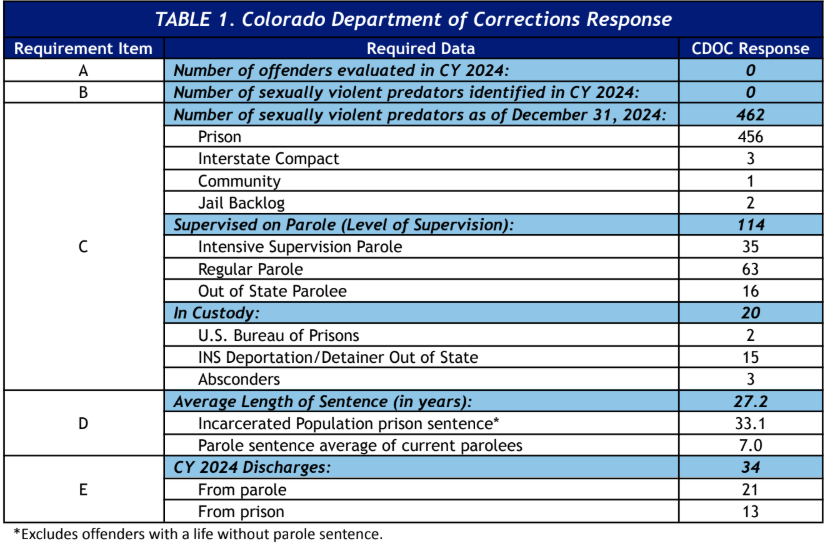
Copies of the reports the department provides for this legislation may be accessed by clicking below.
- HB 07-1172 Sexually Violent Predators Data Reports
Sexually Violent Predator Report FY24 Sexually Violent Predator Report FY23 Sexually Violent Predator Report FY22
Sexually Violent Predator Report FY21 Sexually Violent Predator Report FY20 Sexually Violent Predator Report FY19
Sexually Violent Predator Report FY18 Sexually Violent Predator Report FY17 Sexually Violent Predator Report FY16
Sexually Violent Predator Report FY15 Sexually Violent Predator Report FY14 Sexually Violent Predator Report FY13
Sexually Violent Predator Report FY12 Sexually Violent Predator Report FY11 Sexually Violent Predator Report FY10
Sexually Violent Predator Report FY09 Sexually Violent Predator Report FY08 Sexually Violent Predator Report FY07